
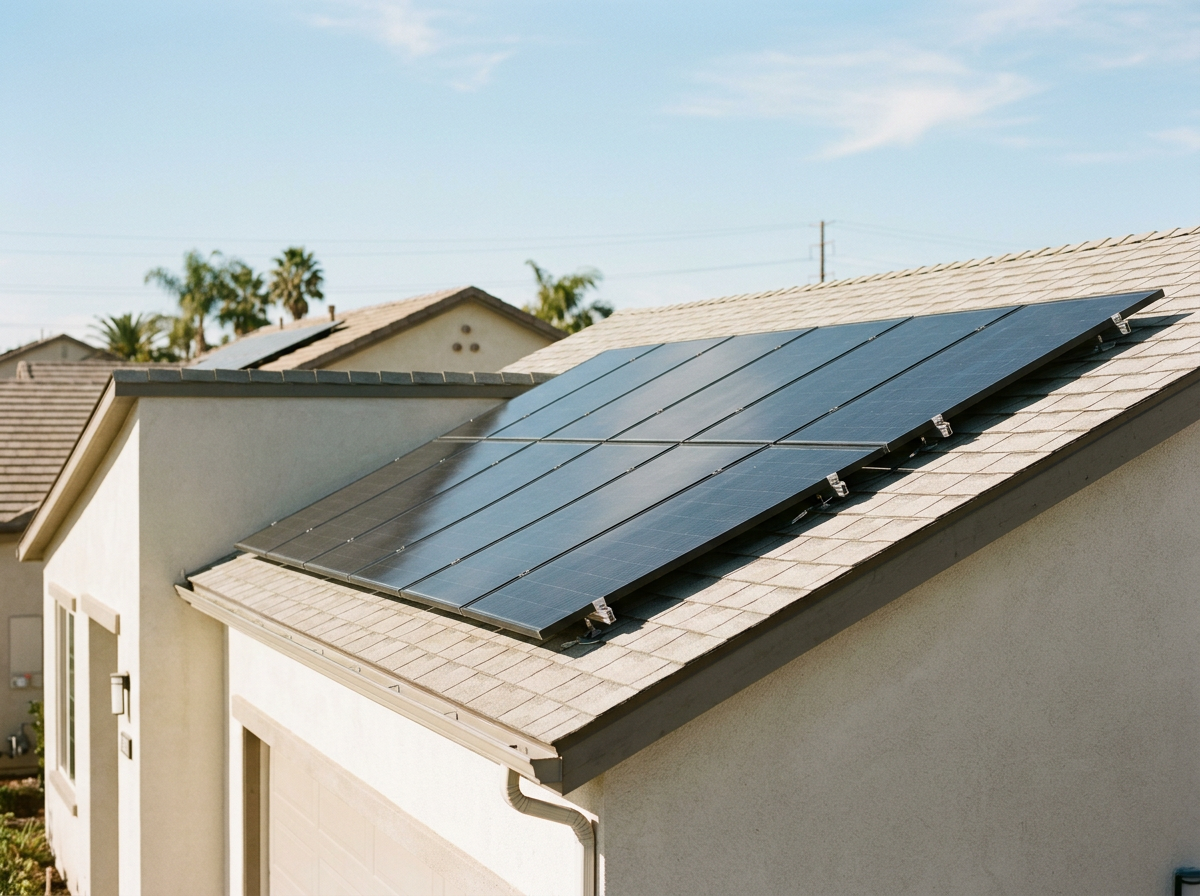
From Sunlight to Clean Energy: How Photovoltaic Cells Power Residential Solar Panels
If you are looking at residential solar panels for your roof, you are looking at one of the cleanest, most reliable energy technologies available today. But how does a solid piece of dark glass turn a sunny afternoon into electricity that powers your refrigerator, television, and electric vehicle?
The answer lies inside the photovoltaic (PV) cells—the microscopic engines that make up every solar panel. Here is a simple, step-by-step breakdown of how these cells work to power your home.
What is a Photovoltaic Cell?
The word photovoltaic combines two Greek terms: photo (meaning light) and voltaic (meaning electricity). A solar panel is not just one giant light collector; it is a grid made up of many smaller photovoltaic cells linked together.
Residential solar panels typically contain 60 to 72 individual PV cells. Each cell is constructed using silicon, a chemical element found abundantly in natural sand. Silicon acts as a semiconductor, meaning it can conduct electricity under the right environmental conditions—specifically, when exposed to sunlight.
1. Creating the "Electric Field"
A single slice of silicon cannot create electricity on its own. To fix this, manufacturers deliberately mix other elements into the silicon layers of the cell to create an electrical imbalance:
The Top Layer (N-Type): This layer is treated with phosphorus, giving it an abundance of negative electrons.
The Bottom Layer (P-Type): This layer is treated with boron, leaving it with fewer electrons (creating "holes" that carry a positive charge).
Where these two opposite layers meet in the middle, an internal electric field is formed. This field acts like a one-way turnstile for electrical energy.
2. Absorbing Sunlight
Sunlight is composed of tiny packets of energy called photons. When the sun shines on your roof, these photons bombard the top surface of the PV cells. The silicon material absorbs the incoming photons, and their energy is transferred directly into the electrons in the silicon.
3. Loosening Electrons
When the electrons absorb this photon energy, they get "excited" and break free from their normal atomic bonds. Because of the built-in electric field we mentioned in Step 1, these free electrons are instantly forced to move in a single direction—toward the front, negative layer of the cell.
4. Generating the Current
Metal conductive plates and thin wire "fingers" on the top of the cell capture these moving electrons. Because electricity is simply the flow of electrons, this movement creates an electrical current. The cells funnel this current out of the panel and into your home's electrical system.
Sunlight/Photons
       ↓
+-----------------------+  ← Front Metal Grid (Captures electrons)
 N-Type Silicon (-)              ← Layer with extra electrons
       |.......................|               ← P-N Junction (Internal Electric Field)
 P-Type Silicon (+)              ← Layer with missing electrons
+---------------------+  ← Back Contact Plate
       ↓
Direct Current (DC) Electricity Generated
Connecting the Cell to the Home: The Inverter
The electricity generated by a residential PV cell is Direct Current (DC), meaning the electrons flow continuously in one single direction. However, your home’s appliances and the local utility grid run on Alternating Current (AC), where the current rapidly switches directions back and forth.
To bridge this gap, the DC power from your solar panels travels straight to an appliance called a solar inverter (either a central string inverter on your wall or small microinverters attached to each panel). The inverter converts the DC electricity into usable AC electricity, allowing you to run your household items seamlessly.
Why Efficiency Matters for Homeowners
When shopping for home solar, you will frequently see a metric called panel efficiency. Most modern residential solar panels have an efficiency rating between 19% and 23%.
This percentage represents the amount of sunlight hitting the PV cells that is successfully converted into electricity. The rest of the sunlight is either reflected away, passes straight through, or turns into ambient heat. Choosing highly efficient PV cells means you can generate more power using fewer panels, making the most of your limited roof space.
https://www.eia.gov/energyexplained/solar/photovoltaics-and-electricity.php
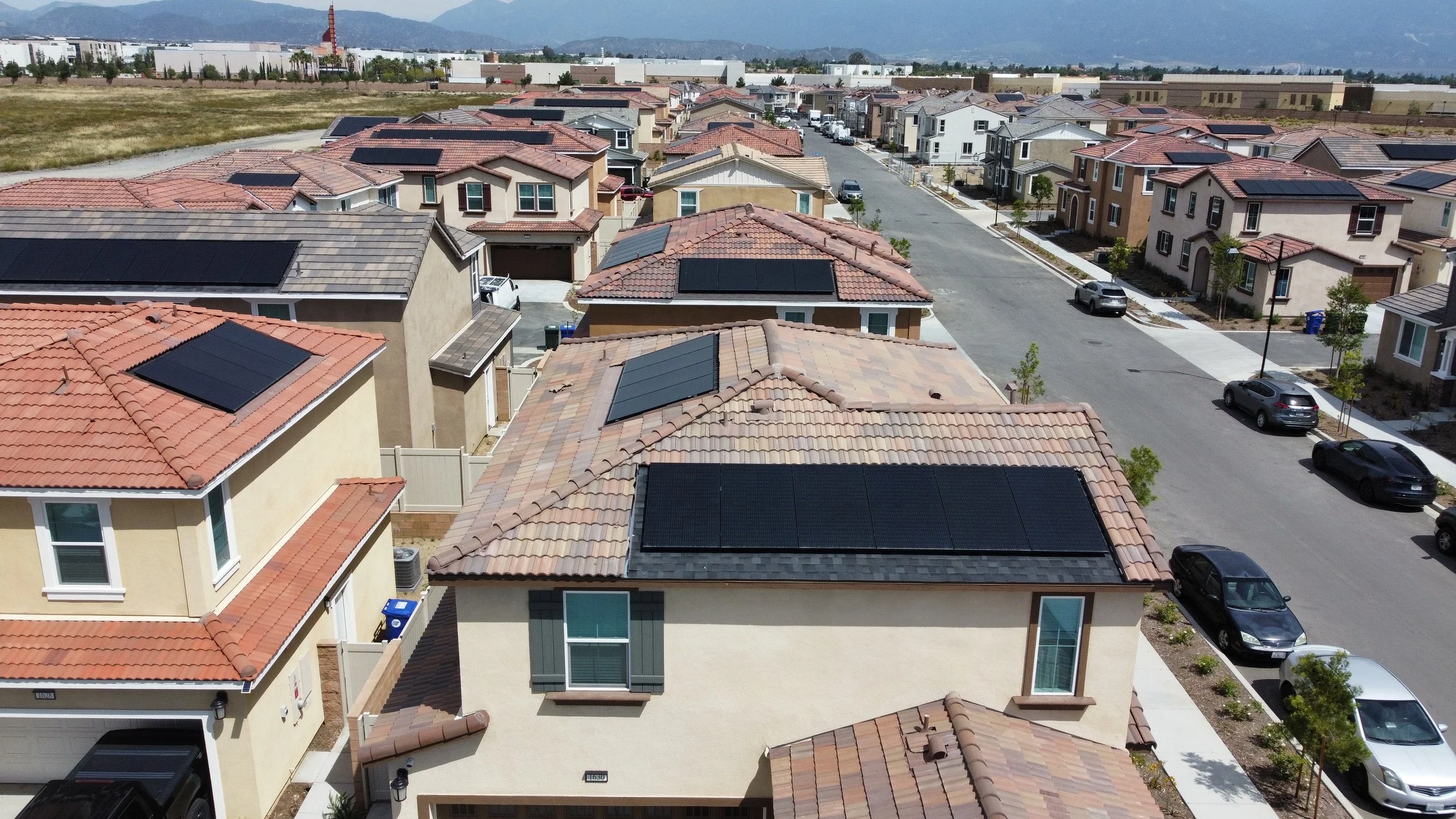
Clear the Air: Why Wildfire Ash is Silent Poison for Your Solar Panels
When wildfire smoke rolls in, the sudden drop in your solar app’s energy production is obvious. The sky turns orange, the sun is blocked, and your generation plummets. But while the smoke eventually clears and the blue skies return, what lingers behind poses a much greater, long-term threat to your investment: wildfire ash.
Unlike regular dust, ash doesn’t just blow away. If left unaddressed, it can quietly degrade your system's efficiency and cause permanent physical damage. Here is why fire ash is uniquely bad for your solar panels.
1. Massive Efficiency Losses
Regular environmental dust might reduce your panels' output by about 5%. Wildfire ash operates on a completely different scale. Data from the National Renewable Energy Laboratory (NREL) shows that heavy ash accumulation can slash solar efficiency by 15% to 40%, with extreme cases seeing drops up to 47%.
Because ash particles are incredibly fine, they spread evenly across the glass, creating a dense, opaque barrier that completely blocks photovoltaic cells from absorbing sunlight.
2. The "Morning Dew" Glue Effect
If you think you can just wait for a light rain to wash the ash away, think again. Ash has a nasty habit of reacting with moisture. When morning dew or light rain hits the ash layer, it doesn't wash off—it transforms into a thick, cement-like paste. This paste dries hard under the sun, baking itself onto the glass. A light rain will simply smear this mixture into stubborn, light-blocking streaks.
3. Chemical Corrosion and Etching
Wildfire ash is highly alkaline. When it mixes with water and sits on your panels over a dry season, it forms a mildly caustic film. Over time, this chemical compounding actively attacks and etches the delicate anti-reflective coatings on the glass and can degrade the protective seals around the panel frames. Once that anti-reflective coating is damaged, the panels lose a portion of their energy-generating capacity permanently.
4. Severe Scratching and Mechanical Damage
Ash is highly abrasive, often full of jagged, microscopic grit. The absolute worst thing a homeowner can do is take a dry cloth, a squeegee, or a standard broom to the panels to sweep the ash away. Wiping dry ash across the glass acts exactly like sandpaper, leaving thousands of fine scratches across the surface that permanently scatter light and diminish future energy output.
5. Thermal Hotspots
Solar panels are built to withstand standard heat, but they rely on the sun's energy passing through the glass to be converted into electricity. When a thick layer of dark ash blankets the surface, it acts as an insulator, trapping heat inside the panel. This can lead to localized "hotspots," which prematurely degrade the internal circuitry and accelerate the aging of the panel.
The Right Way to Handle Ash
If your area has been affected by wildfire fallout, keep a close eye on your solar dashboard. If your production curve remains flat or heavily degraded even on clear, sunny days, your system is likely suffering from baked-on ash.
Hire a professional: Because of the slip risks of ash on a roof and the delicate chemical nature of the grime, hiring a professional solar cleaning service utilizing pure water and non-abrasive equipment is always the safest route for both you and your warranty.
https://hansenergysystems.com/blog/mechanics-wildfire-ash-blocks-solar-efficiency

HOW SHOULD YOUR PANELS BE CLEANED?
You should clean your solar panels during the early morning hours on a cool, overcast day to prevent water from evaporating too quickly and leaving residue.
Preparation and Safety
Before starting, turn off your solar system to avoid any electrical hazards. Inspect the panels and visible wiring from the ground for any damage or wear. Always clean from the ground using an extension brush if possible to avoid working at dangerous and slippery heights on a roof or ladder.
Choosing Tools and Materials
Use only non-abrasive tools like a soft-bristled brush . Avoid high-pressure washers, harsh chemicals, abrasive soaps, and metal tools that can scratch the glass or ruin the anti-reflective coating. Stick to plain water or if possible, a spotless water filtration system attached to a water fed extension pole.
Washing the Panels
Solar panel cleaning is the most common maintenance performed on residential phototactic (PV) energy systems, especially those in dry or windy areas. When dirt, dust, debris, or animal droppings accumulate on the surface of your solar panels, blocked sunlight can significantly reduce their energy production. Knowing this, regular solar panel cleaning can help ensure the maximum output efficiency of your solar power system.Never spray cold water onto hot panels, as the extreme temperature change can crack the glass. If your solar panels are installed on your roof, consider hiring a professional when it is time for a cleaning. Hiring a professional can ensure the job is done both safely and effectively, with the least personal and financial risk involved.
Rinsing and Maintenance
Finish by thoroughly rinsing away any soap residue with clean water so it does not block sunlight. Let the panels air dry completely rather than using a squeegee, which might harm the surface. Monitor your energy production via an app to see if your cleaning efforts successfully restored efficiency.
Workmanship and wiring warranties
Most critical solar maintenance is done to ensure that a system’s electrical components are all working safely and in good condition, which requires a professional inspection. To reduce potential future expenses and maximize your investment in solar, wiring and electrical inspections should be scheduled near the end of your workmanship warranty (also known as your labor warranty) period, which is usually between five and ten years.
For maintenance needs that extend beyond basic cleaning—like firmware updates, inverter diagnostics, or resolving part issues—having a trusted support partner becomes essential.
https://enphase.com/blog/homeowners/solar-panel-cleaning-and-maintenance-guide

What osha & icsa says about solar panel cleaning.
OSHA classifies solar panel cleaning as general industry maintenance, meaning it is governed by a specific set of safety standards separate from initial construction. Because the federal agency does not have a single regulation dedicated solely to solar servicing, employers must synthesize multiple existing rules to protect workers. Failing to follow these cross-cutting frameworks can lead to hefty federal penalties exceeding $15,000 per violation.
Fall protection stands out as the most heavily cited hazard by safety inspectors overseeing rooftop solar operations. Under OSHA general industry standards, protective systems are mandatory whenever a technician works at a height of 4 feet or more above a lower level. To comply, companies must implement guardrails, safety nets, or personal fall arrest systems, ensuring that any roof anchor used can withstand at least 5,000 pounds of force per worker.
Electrical hazards introduce extreme danger because photovoltaic panels generate live electricity whenever they are exposed to daylight. OSHA notes that typical lockout/tagout procedures cannot fully "de-energize" a panel under the sun. Crews must use insulated personal protective equipment (PPE), such as voltage-rated Class 0 rubber gloves, and utilize non-conductive water-fed poles to eliminate arc flash and shock risks.
Operational and environmental controls dictate the rest of the safety framework required during a wash. Employers must provide comprehensive training on ladder safety, maintaining a stable 4:1 angle and three points of contact at all times. Additionally, because crews work outside with water, supervisors must proactively monitor weather conditions to prevent slips from high winds, while supplying ample hydration to combat outdoor heat illness.
ABLEMKR. (n.d.). Solar safety standards vs. OSHA guidelines. https://ablemkr.com/solar-safety-standards-vs-osha-guidelines/
Dawson, C. (n.d.). Solar panel cleaning safety guidelines. Soilar Technologies. https://soilar.tech/solar-panel-cleaning-safety-guidelines/
International Solar Cleaning Academy. (2024, September 10). Solar panel cleaning safety in California: What does Cal/OSHA say? https://theisca.org/index.php/2024/09/10/solar-panel-cleaning-safety-in-california-what-does-cal-osha-say/
Simplified Safety. (n.d.). OSHA fall protection for solar installation. https://simplifiedsafety.com/blog/solar-osha-fall-protection/
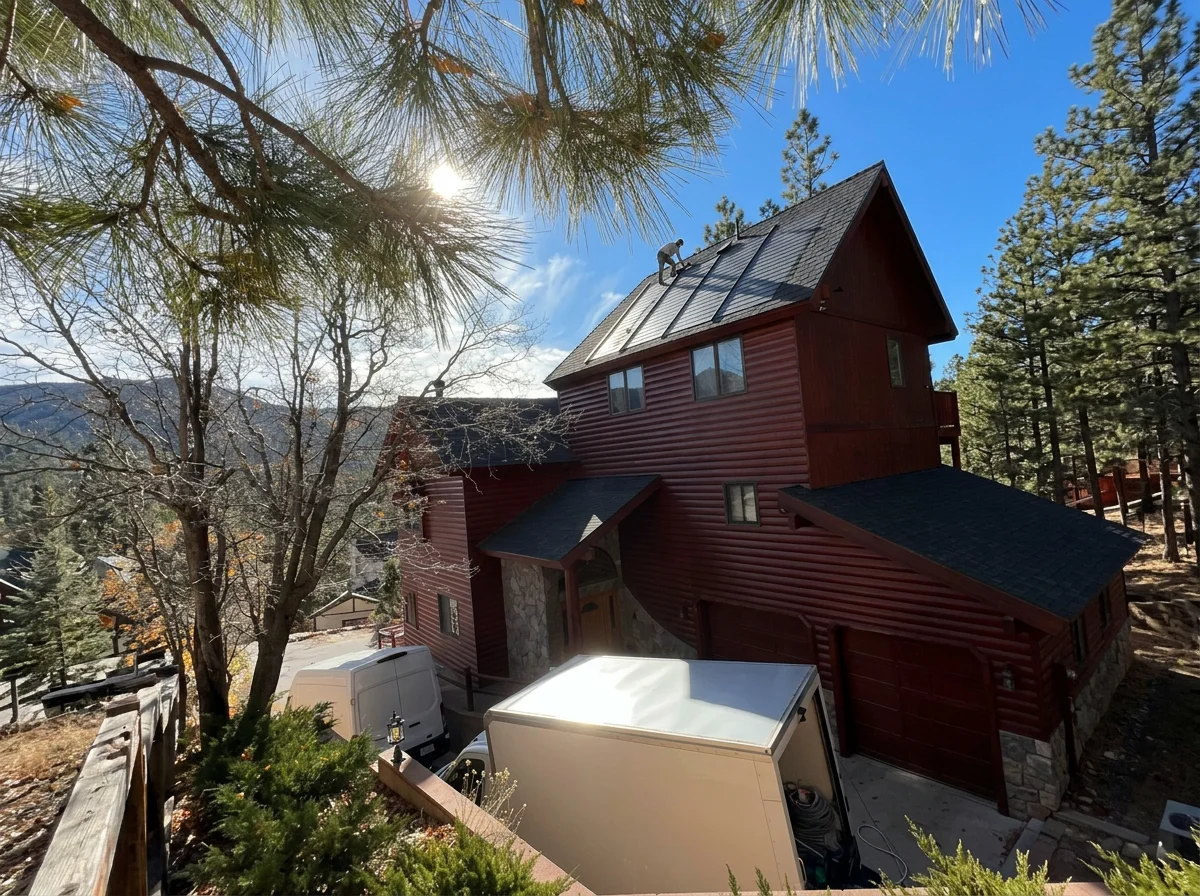
Why working at heights is dangerous.
Working at heights in Southern California (SoCal) poses extreme physical dangers to labor forces due to harsh environmental factors and severe fall risks. According to regional data from the U.S. Bureau of Labor Statistics, the construction sector consistently suffers the highest number of workplace fatalities in California, with falls, slips, and trips causing more than half of those sector deaths. In the intense SoCal climate, working elevated on roofs, scaffolding, or ladders exposes workers to severe heat stress and strong coastal winds, which significantly increase the risk of dizziness, loss of balance, and equipment instability. A single misstep can result in devastating trauma—such as spinal injuries, brain damage, or death—proving that even a brief lapse in concentration at an elevated level can be catastrophic.
Organizations like Associated Builders and Contractors of Southern California emphasize that falling remains the primary component of OSHA’s "Focus Four" hazards. Without site-specific fall arrest systems, secure guardrails, and rigorous safety training, the fast-paced nature of Southern California’s booming construction and trade industries will continue to make working at heights one of the most hazardous occupational duties in the region.
Dropping objects from a significant height poses a severe threat to human life and property due to the laws of physics. When an item falls, gravity converts its potential energy into kinetic energy, causing it to accelerate rapidly until impact. This acceleration means that even a minor, lightweight tool can strike the ground with catastrophic, multiplied force. For example, data provided by the SPI Health and Safety Blog shows that a mere 5-pound tool dropped from 50 feet hits the ground with an immense impact force of 708 pounds. In extreme cases, an eight-pound wrench falling from 200 feet can generate an impact force equivalent to a small car striking a single square inch, rendering standard personal protective equipment like hard hats largely ineffective.
ABC SoCal Staff. (2026, July 8). OSHA Focus Four: Fall protection strategies for Southern California construction. Associated Builders and Contractors Southern California. https://abcsocal.org/osha-focus-four-fall-protection-strategies-for-southern-california-construction/
FallTech. (n.d.). Cal/OSHA lowers fall protection height for residential work: How to stay compliant. FallTech. https://www.falltech.com/blog/industry-news-updates/cal-osha-lowers-fall-protection-height-for-residential-work-how-to-stay-compliant
IWINS. (n.d.). Cal/OSHA's updated fall protection standards. InterWest Insurance Services. https://www.iwins.com/blog/cal-oshas-updated-fall-protection-standards/
SafeStart. (2018, July 18). Why do people (and tools) continue to fall from heights? SafeStart. https://safestart.com/news/why-do-people-and-tools-continue-to-fall-from-heights/
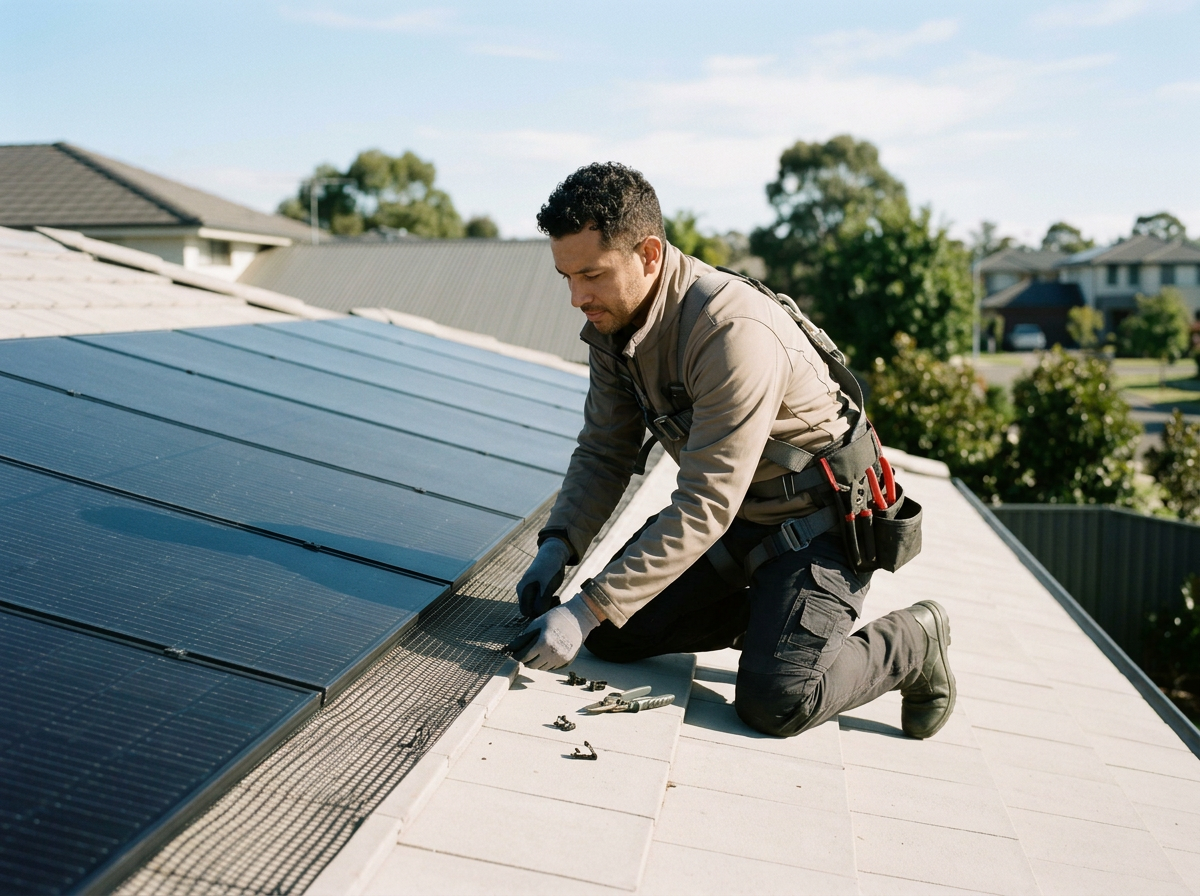
Why bird proofing is important.
Bird proofing solar systems is a critical maintenance step that safeguards your renewable energy investment from the costly damages caused by urban wildlife. The warm, sheltered space between rooftop solar panels and the roof surface creates an ideal nesting habitat for birds, particularly pigeons.
However, this nesting behavior poses severe risks: accumulated bird droppings shade solar cells and can reduce overall energy output by up to 20%, while acidic waste gradually corrodes panel frames and roof tiles. Furthermore, sticks and feathers packed underneath block essential airflow, causing the system to overheat and operate less efficiently, while nesting pests frequently chew or dislodge internal DC cabling, creating major electrical faults and potential fire hazards.
To counter these threats effectively, homeowners utilize physical barriers like specialized solar panel mesh guards, which stand as the industry gold standard for long-term exclusion. Constructed from durable, weather-resistant materials such as PVC-coated or galvanized steel, this mesh wraps entirely around the perimeter of the solar array to completely block animal access without restricting vital cooling airflow.
Comprehensive solar panel cleaning physically destroys the biological habitat that bird mites rely on for survival and reproduction. When feral pigeons and other wild birds nest in the warm, sheltered void beneath residential solar arrays, they bring along parasites like Ornithonyssus sylviarum (northern fowl mite) and Dermanyssus gallinae (red poultry mite). A professional solar cleaning service starts by extraction, utilizing industrial vacuums and blowers to completely remove heavily infested organic materials. Evacuating the actual nests, twigs, feathers, and organic debris strips the mites of their structural breeding grounds and physical harborage.

Is solar cleaning necessary ?
Regular solar panel cleaning is essential for maximizing energy efficiency, protecting overall system performance, and safeguarding your long-term financial investment.
Over time, environmental elements like dust, pollen, bird droppings, and industrial pollution form a persistent film on the surface of photovoltaic cells. This layer acts as a physical barrier that obstructs sunlight, which directly reduces the amount of electricity your system can generate. While light rain may rinse away loose dust, it often fails to remove sticky residues like sap or pollen. Keeping panels clear ensures that light absorption remains optimal, preventing energy losses that studies estimate can range from 5% to over 20% depending on your local environment.
Beyond immediate energy output, routine maintenance plays a critical role in preserving the physical hardware and upholding manufacturer requirements. Heavy localized accumulation of grime or partial shading from stubborn debris can create localized overheating known as hot spots, which strains the internal cells and accelerates physical degradation. Furthermore, many solar equipment manufacturers mandate periodic cleaning and maintenance as a strict condition of their product warranties. Proactive cleaning not only maintains peak electrical generation and lowers utility bills, but it also protects your warranty coverage and extends the operational lifespan of your renewable energy system.